

Targeted crackdown has reduced knife robberies by almost a quarter in 7 forces since June 2024
More than 230 areas most affected by knife crime will see more police patrols, CCTV and early prevention work as part of a knife crime crackdown across 27 police forces in England and Wales.
The Home Secretary is backing local plans developed by police and councils to tackle crimes, save lives and protect local communities.
Each plan will be tailored to the area. They will combine tough police enforcement activity such as enhanced police patrols, alongside programmes designed for young people most at risk of being a victim or a perpetrator of knife crime.
There will also be improvements to public spaces, including better lighting and redesigning areas to prevent weapons being hidden.
Growing evidence shows that concerted action in small, targeted areas is the most effective way of driving down knife crime.
This crackdown comes as new data shows 7 forces – Metropolitan Police, West Midlands Police, Greater Manchester Police, West Yorkshire Police, South Yorkshire Police, Avon and Somerset Police and British Transport Police – made real inroads into tackling an issue that has blighted communities across the country, identifying and arresting more people through the better sharing of data.
Across these forces, knife-enabled robbery has plummeted by nearly a quarter (23%) since the General Election – with more than 3,600 fewer knife robberies reported.
This builds on huge steps forward on knife crime since the government came into office. Overall knife crime is down by 11%, as the government continues to make progress towards its target of halving it within a decade.
Home Secretary Shabana Mahmood said: “Everyone deserves to feel safe in their community, and no young life should be blighted by knife crime.
“Targeted policing and prevention, focused on the areas where the need is greatest, is already cutting knife robberies by nearly a quarter. That means safer streets, and fewer lives lost.
“I am now taking this approach to more than 230 areas across the country. This government is getting tough on knife crime and on the causes of knife crime to make our communities safer.”
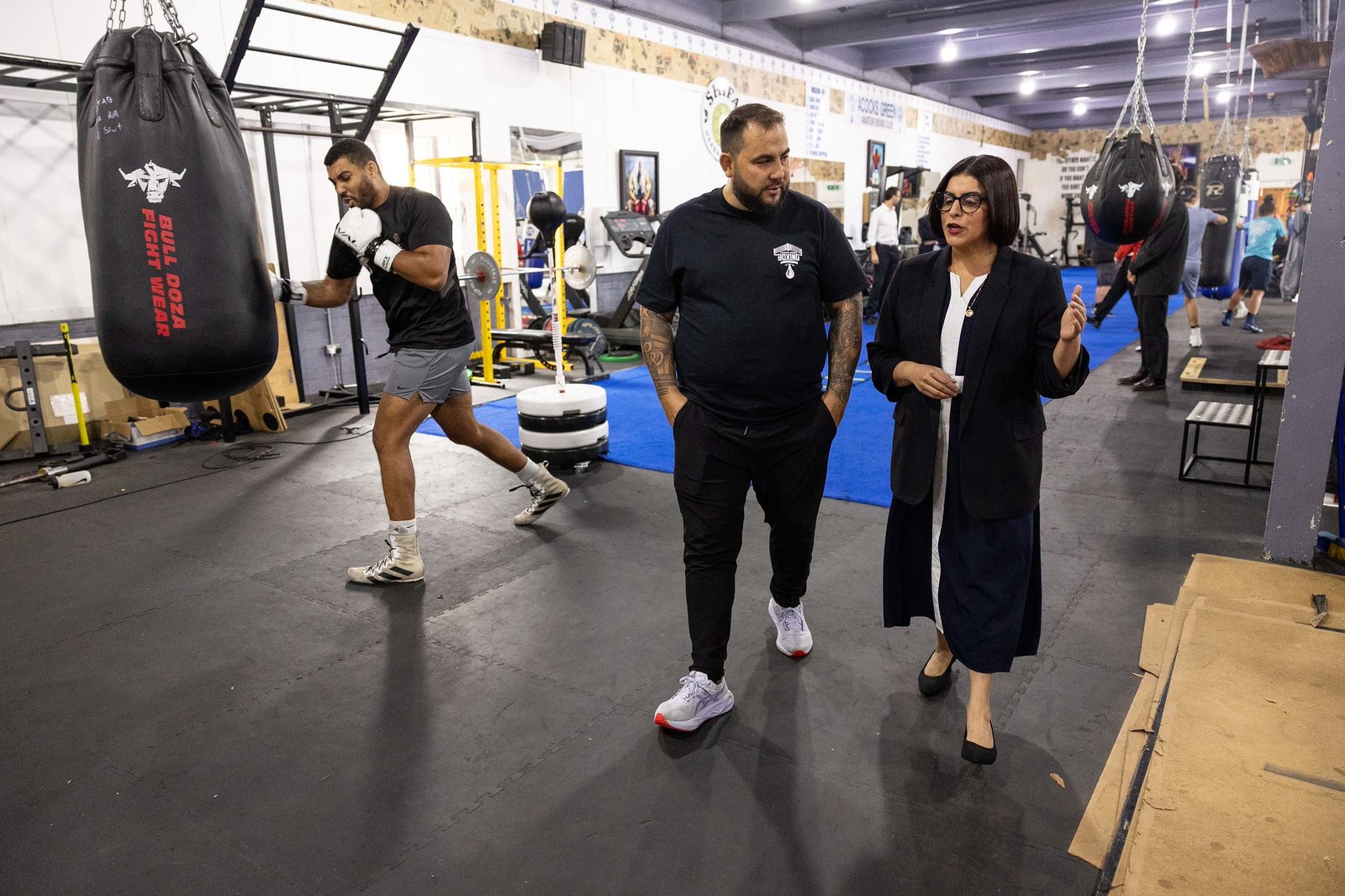
On Thursday (17 September), Shabana Mahmood visited the West Midlands, one of the regions receiving additional funding through the Knife Crime Concentrations Fund.
She was joined at a local boxing gym, which plays a vital part in supporting vulnerable young people to stay away from crime, by members of the Coalition to Tackle Knife Crime: Lynne Baird MBE, Pastor Lorraine Jones Burrell MBE, and Pooja Kanda OBE.
Campaigning by these 3 women – who have all tragically lost children to knives – has helped keep the issue at the top of the national agenda and reinforced the need for action on enforcement, prevention and protecting young people from being drawn into violence.
Pooja Kanda OBE, founder of Justice for Ronan Kanda, said: Having lost my son Ronan, I know the devastating consequences of knife crime. Behind every statistic is a family and community that has been changed forever.
“These reductions are encouraging, but I am even more encouraged by the Home Secretary’s commitment to targeted action in areas experiencing the greatest harm. Enforcement is vital, but sitting equally alongside prevention and early intervention – reaching young people before violence sets in and addressing the circumstances that allow it to develop.
“Ronan’s Law showed what can be achieved when government, campaigners, policing and communities work together. The progress we are seeing matters. Now we must remain determined, build on it, and continue to give young people genuine alternatives and hope.”
Lynne Baird MBE, founder of the Daniel Baird Foundation, said: “The Daniel Baird Foundation welcomes the Home Office’s focus on tackling knife crime, and the targeted action being taken in communities most affected by violence.
“Reducing knife-enabled robbery and preventing young people from becoming involved in violence is vitally important. We commend the funding’s ability to be used for preventative measures, including education, early intervention and an understanding of the devasting consequences that knife crime can have.
“Our vision is in line with the government’s – stop the violence where we can. Prevention saves lives. Preparedness saves lives too.”
Pastor Lorraine Jones Burrell MBE, founder of Dwaynamics, said: “As a mother who lost my son Dwayne to knife crime, and as someone who has spent many years working on the frontline with young people, families and communities affected by violence, this announcement gives me greater peace of mind, despite the tears that will always remain. For me, it is loss mixed with hope.
“I particularly want to commend the Home Secretary for the leadership, determination and humanity being shown in driving this work forward. What stands out to me is that this is not only about policies, policing or statistics.
“There is a human approach at the heart of it: one that recognises the value of every young life and understands the devastating impact violence has on families and communities. As a bereaved mother, that matters deeply to me.
“Through my involvement with the government’s Knife Crime Coalition, the importance of grassroots organisations that bring people together around a shared determination to save young lives has been recognised.
“There is compassion alongside action, and that gives me hope. It shows our young people that their futures matter at the very highest levels of government. This is how we begin mending what has been broken.”
Patrick Green, CEO of The Ben Kinsella Trust, said: “The Knife Crime Concentration Fund is an important government investment in targeted prevention, directing resources to the areas most affected by knife crime and helping local partners focus support where it is needed most.
“We know that lasting reductions in knife crime are achieved when enforcement is combined with education, early intervention and strong community partnerships. I welcome the government’s commitment to a more joined-up approach that recognises the vital role prevention plays in tackling knife crime.”
Caroline Willgoose, mother of Harvey Willgoose and knife crime campaigner said: “This funding, targeted to the specific needs of local communities, is an extremely welcome step from the government.
“In Harvey’s memory, I will continue working every day to make sure that no parent has to suffer in the same way. I will do whatever is possible to make this funding a success, and thank the government for their focus and attention on stopping knife crime.”
Serena Wiebe, member of the government’s Coalition to Tackle Knife Crime said: “We welcome this investment and the targeted government approach being taken in the communities most affected by knife crime.
“The fall in knife-enabled robbery is encouraging and shows that when we understand where violence is happening and focus our response, we can make a real difference.
“What is particularly important is that this approach brings together targeted enforcement, prevention and community-led intervention. We need to intervene earlier and invest in trusted local organisations that understand their communities, can build relationships with young people and reach them before they get to crisis point.
“We have spent 20 years working with young people affected by violence and inequality, and one thing I have learned is that violence isn’t inevitable. By combining intelligent, targeted enforcement with long-term prevention, community expertise and opportunities for young people, we can make our streets safer and, most importantly, stop young people losing their lives.”
Faron Paul, Founder and CEO of Fazamnesty and member of the Coalition to Tackle Knife Crime, said: “It is encouraging to see knife crime moving in the right direction, but there is still much more work to do.
“The £26.25 million Knife Crime Concentrations Fund is an important opportunity to bring enforcement, prevention and community-led intervention together in the areas experiencing the greatest harm.
“From our work on the ground, we know trusted community organisations have a vital role to play alongside police, councils and other partners. Every knife taken off the streets matters, but our ultimate goal must be preventing young people from picking one up in the first place.”
Leanne Lucas, Founder of Let’s Be Blunt CIC and member of the government’s Coalition to Tackle Knife Crime said: “Early intervention does not mean simply educating children as young as possible. It means recognising risk and intervening at the earliest appropriate point – whether that is with a young person, an adult, a parent or a whole family.
“That intervention must also be trauma-informed. Prevention should never rely on fear, shock or distress. It should be age-appropriate, evidence-informed and delivered in a way that understands people’s experiences, builds trust and supports them to make safer choices.
“Families need education and support just as much as young people do. Parents and trusted adults are often the people best placed to spot changes, ask questions and help prevent situations from escalating.
“From both lived experience and through the work of Let’s Be Blunt, I have seen how important it is that national decision-making is informed by those working within communities every day.
“There is still much more to do, but it is encouraging to see government recognising the importance of local knowledge and giving areas greater ability to respond to what they are seeing on the ground. This investment is a positive step in supporting that approach.
“We cannot only invest after harm has happened. Prevention means acting sooner, working together and making practical, trauma-informed changes that reduce the opportunity for harm in the first place. That is where real, long-term change begins.”
Sacha Ray, CEO of Lives 2Not Knives and member of the government’s Coalition to Tackle Knife Crime said: For over 19 years, Lives Not Knives’ model has been built on the premise that preventative action is far better than the cure.
“Knife crime statistics are moving in the right direction. It cannot be underestimated how preventative work such as the mentoring in schools, youth club spaces and knife crime roadshows, which Lives Not Knives deliver play a huge role in preventing more young people picking up a knife.
“Lives Not Knives welcome the government’s continued targeted approach and successful drive to reduce the blight of knife crime and the harm it causes.”
Anna-Mai Andrews, Interim CEO, Steel Warriors said: “Taking a knife off the street is where prevention starts, but it only lasts if young people have somewhere to go and someone to trust.
“Steel Warriors is where prevention persists; we melt down confiscated knives and forge them into free outdoor calisthenics gyms, with classes run by coaches from the same communities they serve. We welcome this holistic approach to prevention in the places that need it most, and we’re ready to work with local partners to give more young people opportunities for something new.”
Dr. Nathaniel Peat, founder of The SafetyBox said: “This is an excellent and much-needed move from the government. Knife crime cannot be solved by enforcement alone and the blended approach is needed.
“Lasting change happens when government, police, councils, charities, community organisations, schools, and local partners work together to address the root causes of violence. This is very promising news.”
Tracey Burley, Chief Executive, St Giles, said: “Any reduction in the number of young people being harmed through knife crime is welcome, and these figures show what can be achieved when there is sustained focus on the issue.
“But we cannot afford to become complacent. Lasting reductions will not come through enforcement alone. They require long-term investment in prevention, early intervention and trusted relationships with young people and their families.
“At St Giles, we see every day the difference that credible support, combining professional expertise with lived experience, can make.
“The real test will be whether we can sustain this progress and ensure that young people have the safety, support and opportunities they need before violence becomes part of their lives.”
Original Source: The NEN – North Edinburgh News