

Angelina is a librarian and writer who has been writing about video games since 2014. Her work has appeared in publications including GameSkinny and NoobFeed, as well as smaller publications like LT3. Angelina has interviewed Lindsey Stirling, Open Bionics and a number of independent game developers and content creators. She graduated from the Florida Institute of Technology with a BA in Humanities. Outside of writing, she enjoys anime, video games, literature, philosophy, and media studies.
Turn-based strategy RPGs have been around for decades, producing some of gaming’s most memorable adventures along the way. While games likeFinal Fantasy Tactics,Fire Emblem, andTactics Ogreremain staples of the genre, plenty of other tactical RPGs have gradually slipped out of the spotlight despite offering compelling stories, memorable characters, and satisfying strategic combat.
Not every forgotten game is necessarily an old one, either. Some releases simply arrive at the wrong time, get overshadowed by bigger titles, or fail to attract the audience they deserve. These five turn-based strategy RPGs may not be the first games that come to mind when discussing the genre, but they’re worth remembering.
Triangle Strategy Was Somehow Forgotten Almost Immediately
Released in 2022, Triangle Strategy arrived with nearly everything fans of classic tactical RPGs could ask for. Its grid-based battles reward careful positioning, character abilities, and smart party composition, while its branching story gives players meaningful choices that can shape the campaign.
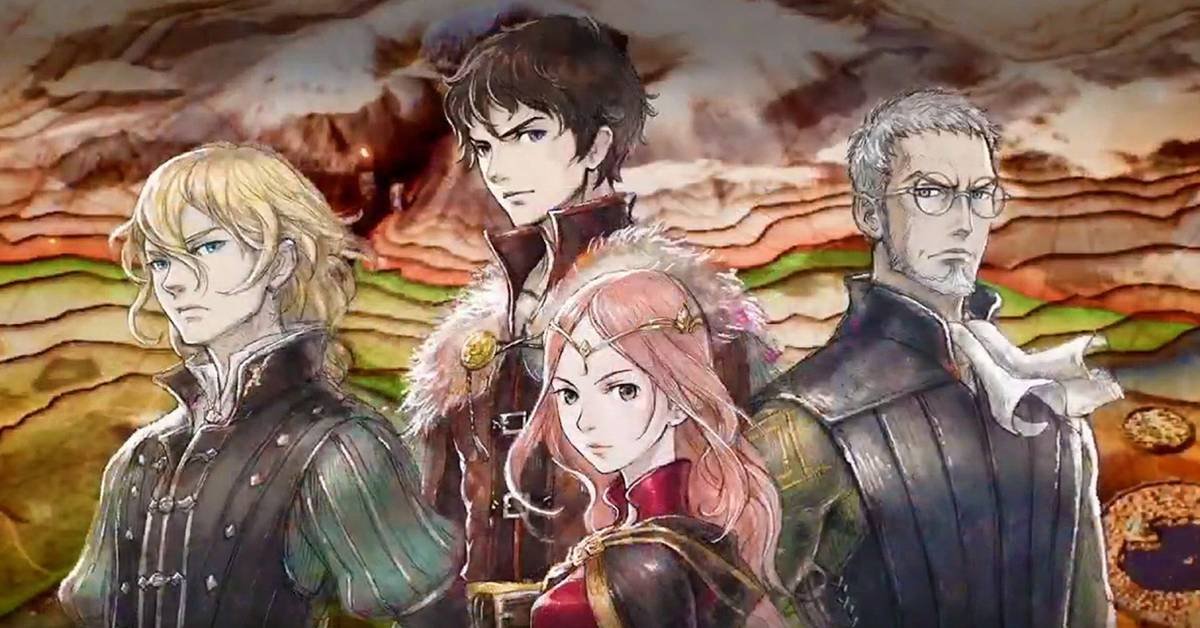
It was developed by Tomoya Asano, who is known for producing Bravely Default and Octopath Traveler, and Triangle Strategy uses HD-2D graphics similar to Octopath Traveler that give it the appearance of high-definition SNES graphics. The story takes place around Serenoa Wolffort, a lord caught in a continental power struggle over dwindling resources.
Three nations, Glenbrook, Aesfrost, and Hyzante, maintain a fragile peace over mining in the Great Norzelian Mine, using House Wolffort to attempt to foster unity. This gives players a high-stakes political drama to navigate alongside the game’s tactical battles, with diverging endings shaped by their decisions.
With the pedigree behind it, Triangle Strategy makes for an unusual choice for a list of forgotten games. It’s hardly ancient, but despite being a modern release from Square Enix, it feels strangely absent from conversations about the genre. For players who missed it the first time around, Triangle Strategy remains an excellent reminder that a game doesn’t have to be decades old to be forgotten.
Wildermyth Makes Every Tactical Battle Part of a Larger Story
Wildermyth is a party-based procedural storytelling SRPG with tactical combat as an extra bonus. There’s no set campaign or set cast of characters, which is unusual for this specific genre. Players build a party of heroes, move them across a map, and battle enemies on grid-based battlefields where positioning and abilities can determine the outcome of each fight.
Players start with a custom character, similar to something like Baldur’s Gate, while the rest of their party consists of NPCs who can change with every campaign. It allows players to watch their party go from novice nobodies to true-blue heroes, with the game’s event system giving characters permanent changes based on the choices players make.
This combination of tactical combat and unpredictable character development gives Wildermyth a distinctive identity among turn-based RPGs. Despite its unique approach and filling a particular niche, Wildermyth has stayed relatively obscure despite being nominated for a Nebula Award for Best Game Writing and receiving an overall positive reception.
Its smaller scale and procedural storytelling make it less immediately recognizable than franchises like Fire Emblem or Final Fantasy Tactics. For players looking for an indie tactical RPG where the characters can become just as memorable as the battles, Wildermyth is worth remembering.
Inkenfell Gives Tactical RPGs a Colorful Twist
Inkenfell is a turn-based tactical RPG developed by Happy Ray Games that wavers between traditional party-based RPG mechanics and grid-based combat. Timed attacks inspired by Paper Mario are present alongside the normal tactical mechanics, giving players another way to maximize their attacks and defend against incoming damage.
Positioning, attacks, character abilities, and timing all play an important role in overcoming the game’s enemies, giving its combat a distinct rhythm compared to more traditional tactical RPGs. The game follows Maritte Hidegaard, who goes to the magical school of Inkenfell to find her sister, Safina, who went missing during summer break.
From there, more heroes join the party as they investigate the strange goings-on at Inkenfell, with each character having unique abilities and personalities. Exploration and combat gradually reveal more about the school’s secrets, while its colorful pixel-art presentation and lighthearted tone give Inkenfell a distinct personality that separates it from more serious tactical RPGs.
Despite its charming presentation and surprisingly deep combat system, Inkenfell was easy to overlook. With the sheer number of indie RPGs released over the years, it wasn’t able to stand out, despite offering a substantial adventure of its own.
Jeanne d’Arc Reimagines Joan of Arc as a Fantasy Hero
Released for the PSP in 2006, Jeanne d’Arc is a turn-based tactical RPG from Level-5 that takes one of history’s most famous figures and turns her into an RPG protagonist. The game takes place during the Hundred Years’ War between France and England, but its version of history includes magic, mythical creatures, and a mysterious armlet that gives Jeanne supernatural abilities outside the ones she allegedly had.
Rather than retelling the tragic tale of Joan of Arc, Jeanne d’Arc uses historical events as the foundation for an entirely new fantasy adventure. The player controls Jeanne and her growing party of heroes as they travel from city to city across a semi-historically accurate map of France.
The game’s anime-inspired presentation fits comfortably alongside other Level-5 projects from the era, while its combination of real historical figures and fantasy elements gives it a distinctive identity. It also manages to take a familiar historical story in a direction that few players would expect from a game about Joan of Arc.
Each character has their own strengths and weaknesses during battle, with the Sol, Luna, and Stella types creating a system similar to rock-paper-scissors or Fire Emblem’s lance, sword, and axe system. Players can also tactically move their allies to protect one another, allowing allied units to use a Unified Guard when one of their teammates is targeted.
Outside of battle, players can manage their equipment and abilities, swapping skills in and out by using gems to obtain new abilities. The game allows players to control 16 different heroic characters, giving them plenty of options when building their party for different battles.
Each character brings their own abilities and strengths to the battlefield, making party composition an important part of preparing for tougher encounters. This gives Jeanne d’Arc a good balance between the familiar tactical RPG formula and its own unique mechanics.
Despite coming from the same developer that would later produce Ni no Kuni, Jeanne d’Arc never reached the same level of recognition as many other tactical RPGs. Its original release was confined to the PSP, putting it on a platform whose library could easily be overlooked once the generation moved on.
Even with a later release on PS4 and PS5, it remains a relatively obscure tactical RPG compared with more prominent franchises such as Final Fantasy Tactics and Fire Emblem. For players willing to dig into the PSP’s library, Jeanne d’Arc offers a surprisingly substantial tactical RPG with a memorable combination of history and fantasy.
Vandal Hearts Is a Deep-Cut Tactical RPG Worth Revisiting
Vandal Hearts is a PlayStation tactical RPG developed by Konami that nobody remembers from 1996, with the game later receiving a port for the Sega Saturn. It was rated M for Mature at a time when fantasy games were seldom rated as such, giving it a surprisingly dark reputation for the genre.
The game spawned two sequels as part of the franchise, but it hasn’t been revisited since a planned Nintendo DS game was announced and then promptly canceled. The story of Vandal Hearts is built around the political intrigue surrounding its protagonist, Ash Lambert, a member of the Ishtarian Security Force.
He uncovers a corrupt government and a massive conspiracy while becoming caught up in the power struggles surrounding the Republic of Ishtaria. The story starts with Ash, his best friend Diego, and Clint serving together in the security force, but as secrets are revealed and time goes on, more characters join the party.
The gameplay uses an isometric viewpoint and a grid-based format, with squares that players cannot pass through because of buildings, water, foliage, and other obstacles. The characters are presented as sprites but can appear three-dimensional when the player rotates the perspective.
Players can move their characters all at once or split their movement into separate actions, allowing for more precise positioning during battles. Seven character classes populate the world of Vandal Hearts: Swordsman, Armor, Archer, Hawknight, Monk, Mage, and Cleric.
Each class has its own strengths and weaknesses, giving players different options when building their party and approaching battles. The game also uses a rock-paper-scissors-style system between certain classes, adding another layer of strategy to its grid-based combat.
POLL
Question 1 of 3
After reading about these lesser-known tactical RPGs, which one are you most interested in trying next?
Triangle Strategy
Triangle Strategy 0%
Wildermyth
Wildermyth 0%
Inkenfell
Inkenfell 0%
Jeanne d’Arc
Jeanne d’Arc 0%
Vandal Hearts
Vandal Hearts 0%
multi-answer Select all that apply When you choose a turn-based tactical RPG, which aspects matter most to you?
Complex, strategic combat systems
Complex, strategic combat systems 0%
Branching narratives or meaningful story choices
Branching narratives or meaningful story choices 0%
Memorable characters and long-term progression
Memorable characters and long-term progression 0%
Distinctive art style or indie-style presentation
Distinctive art style or indie-style presentation 0%
Retro or nostalgic feel from classic-era games
Retro or nostalgic feel from classic-era games 0%
How likely are you to seek out and buy a lesser-known tactical RPG in the next six months?
Very likely — I’m actively hunting for new tactics games
Very likely — I’m actively hunting for new tactics games 0%
Somewhat likely — if it’s on sale or well reviewed
Somewhat likely — if it’s on sale or well reviewed 0%
Unsure — I’m curious but not committed
Unsure — I’m curious but not committed 0%
Unlikely — I mostly stick to big, well-known series
Unlikely — I mostly stick to big, well-known series 0%
See Results
Previous Next
Original Source: CBR