

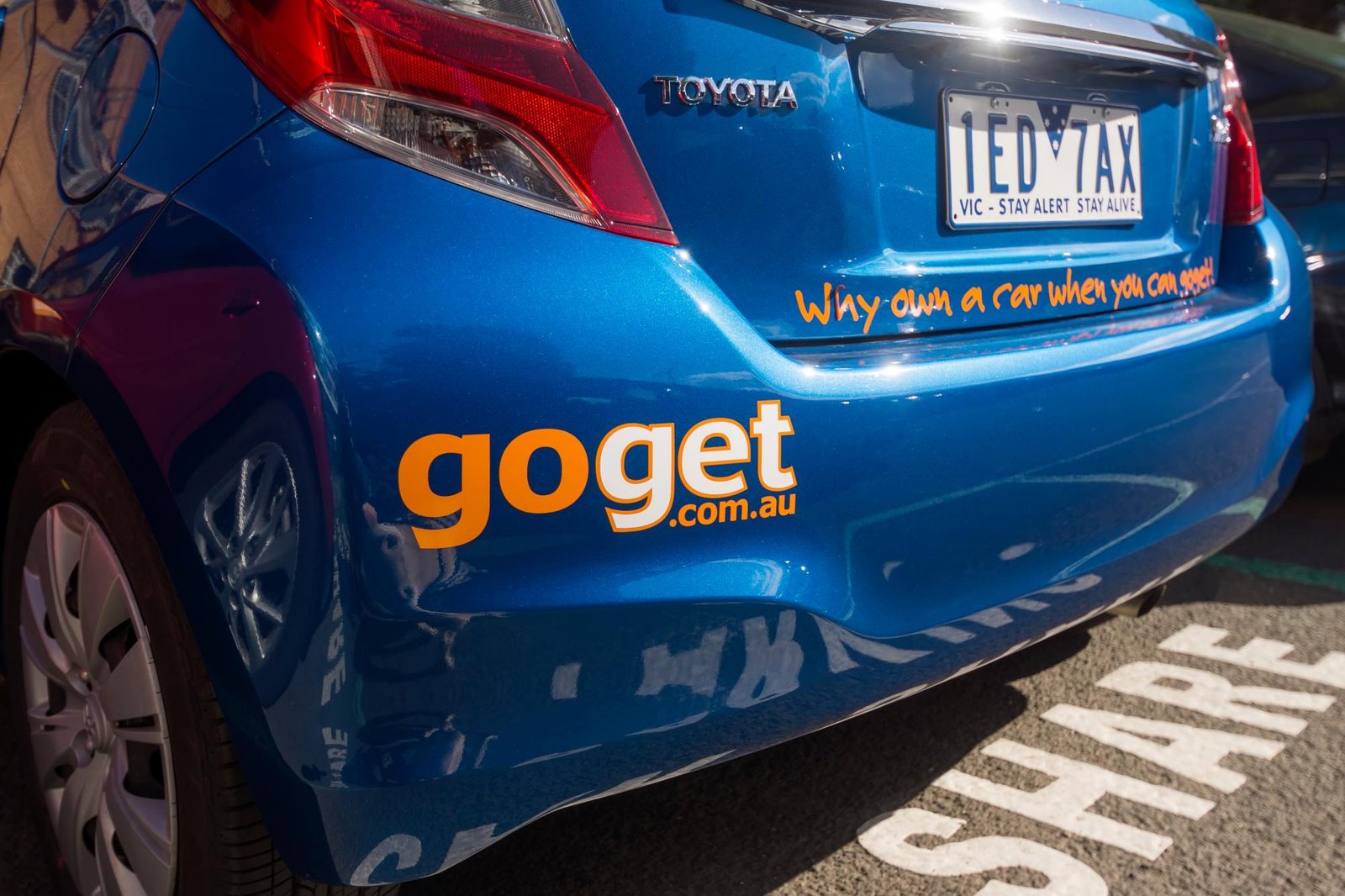
Cars are a major household expense and source of emissions, but some trips are too onerous or inconvenient for public transport.
Owning a car can be expensive. Australians spend about 15% of their household income on transport, according to the Australian Automobile Association. Insurance, registration, servicing and roadside assistance alone can cost about $8,000 per year.
Transport is also Australia’s second-largest emissions source, mostly from cars and light vehicles. Cars make up about half of the carbon footprint for an average household.
For those in major cities, car share services give people access to the benefits of a vehicle without the cost and inconvenience of actually owning one.
Hussein Dia, a professor of transport technology and sustainability at Swinburne University, says car sharing fills the gap for people who mainly rely on walking, cycling and public transport, but occasionally need access to a vehicle for longer trips or with larger loads.
“Perhaps the simplest way of thinking about it is that car sharing changes the question from Do I need to own a car? to Do I need access to a car?”
What is car sharing?
Car sharing is a service offered by companies such as Flexicar, GoGet and Kinto, mainly in capital cities and some regional centres.
By using associated apps, consumers can book and use cars available in designated bays across the city. The City of Sydney, for example, has more than 800 bays for car share vehicles across its council area, and the City of Melbourne has 600.
Most services charge by the hour, and sometimes include a membership fee. Other costs, such as fuel or charging and ownership costs are covered by the company.
Dr Elliot Fishman, director at the Institute for Sensible Transport, says data indicates the average trip in a shared car is 18 hours or more, revealing most people are hiring vehicles for a full day or multiple days.
Fishman says most cars are readily accessible. “On average, each vehicle is hired somewhere between once every two days and once every three days. The exception to that is vans. Where they’ve got vans, those vans are usually busier – about twice as busy as cars.”
What are the environmental benefits?
The City of Melbourne estimates every car-share vehicle removes up to nine privately owned cars off the road, reducing car use by up to 50% per member.
Assoc Prof Jennifer Kent explains that when people get rid of a car and use car sharing instead, they save money while wider society gains the environmental benefits.
“There’s no point using a car-share car and then keeping your own car on the side,” she says.
Dia agrees that the environmental benefits occur when car sharing enables households to own fewer vehicles, and by encouraging greater reliance on greener alternatives such as public transport, walking or cycling.
“A sustainable city does not necessarily require everyone to give up cars. It requires us to own fewer cars and use the vehicles we have more efficiently,” he says.
Cars physically take up more space than other modes of transport, using 9.2 square metres per person, compared with 0.5 to 1.5 sqm for walking, cycling or public transport. Fewer cars means less urban space dedicated to parking and driving, freeing up space for other activities in the city.
Most car share providers offer fleets with a mix of vehicle types – from small hatchbacks to SUVs, vans and utes – some diesel, petrol, hybrid and electric. Kinto offers a hybrid-only fleet to its members, Flexicar has eight EVs accessible across its network in addition to half of the fleet being hybrid, and Evee is all-electric.
Fishman says the operating margins are too small for most car share companies to finance a fully electric fleet. State governments could assist, by offering rebates or free charging at car share bays, he says.
How much can I save?
When comparing the costs of owning a private vehicle, Fishman says a private car generally costs thousands of dollars a year to own, even before fuel or charging.
Kent agrees that the large cost of owning a car makes it easier to justify driving everywhere. The car sharing model brings a different focus.
“People will drive less when they are car sharing, because that economic cost is a day-to-day thing rather than the initial sunk cost that you have in your mind every time you’re using your own vehicle.”
The main market for car sharing is 24- to 34-year-old singles or couples who live in the city, but it has also opened up to families who only own one car.
Fishman says this is because car sharing “can either offset the purchase of a single car for a household, or offset the need for a second car in a household – so that’s generally the value proposition”.
Original Source: AOL.com