

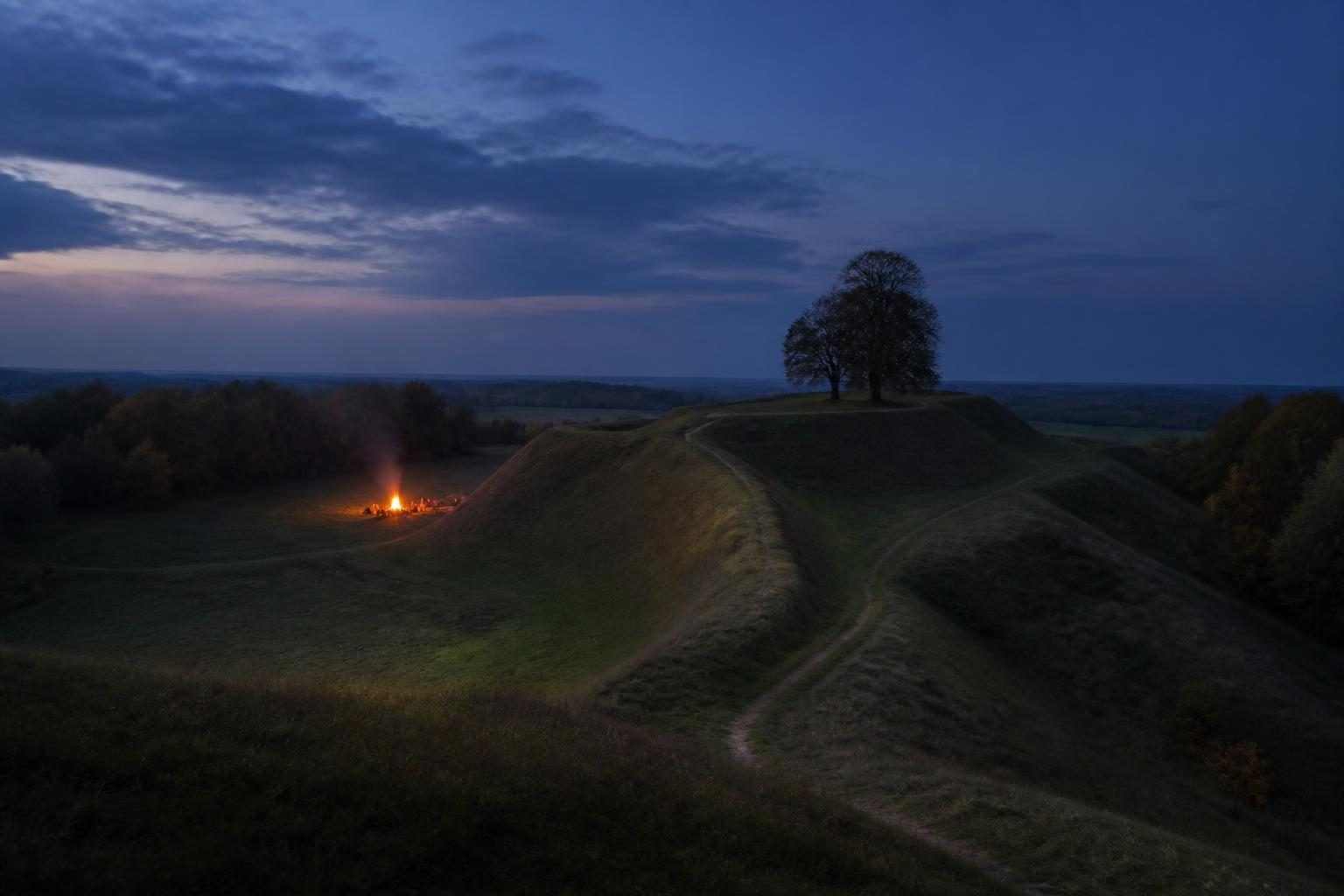
Lithuanian communities are marking the seasonal transition with fire, folklore and gatherings at historic landscapes.
Lithuania is entering the darker half of the year with a series of public gatherings that combine seasonal customs, folklore and local community life. Announcements published on September 18 invite residents and visitors to join autumn-equinox events in Vilnius, Kernavė and other parts of the country, with the main programme unfolding between September 19 and September 22.
The events offer a constructive, cultural counterpoint to the usual calendar of large city festivals. They are rooted in the changing season: the shortening of daylight, the harvest period and the older Baltic practice of marking important moments in the year through fire, song and collective ritual.
Kernavė places the landscape at the centre
The most substantial programme will take place in Kernavė on Saturday, September 19. The State Cultural Reserve Directorate and its partners have announced an evening celebration running from 5:30 p.m. until midnight around the town’s historic hillforts.
The programme is designed around the landscape rather than a single stage. Visitors are promised fire and light performances, educational activities, demonstrations of traditional crafts, creative installations, walks and guided excursions through the surrounding cultural landscape. Concerts and performances will include Lithuanian folklore ensembles, the group Kamanių Šilelis and a production by Kaunas City Chamber Theatre based on Lithuanian mythology and folklore.
The evening’s culmination will be a light and fire ceremony connected with the sculpture Žaltys, created by artist Henrikas Orakauskas, followed by unity fires on the hillforts. Organisers describe the event as a way to experience the seasonal transformation of nature and to recall the idea of unity among the ancient Baltic tribes.
A national tradition with local interpretations
The Kernavė gathering is part of a wider pattern. The Ethnic Culture Protection Council explains that Lithuania’s autumn equinox is now closely associated with Baltic Unity Day, observed on September 22. The date recalls the shared historical and cultural heritage of the Baltic peoples and is marked through a fire relay on hillforts and other places connected with Baltic history.
The practice is deliberately decentralised. Instead of one central ceremony, communities light fires in their own towns, villages and heritage sites. The result is a network of modest local events: some include songs and traditional dances, others offer craft workshops, storytelling, walks, shared food or quiet ceremonies beside an outdoor fire.
A national guide published this week by the cultural organisation Romuva lists gatherings in several regions. Among them are activities in the Tauragnai area, where organisers plan a fire ceremony, a sutartinės singing circle, forest-based activities and communal cooking. Other events include local heritage walks, autumn food traditions and programmes connected with historic hills and archaeological sites.
From seasonal change to community participation
Go Vilnius, the capital’s official tourism and development agency, is presenting the equinox as part of Lithuania’s living seasonal culture. Its September 18 announcement notes that the astronomical equinox will occur in the early morning of September 23, while public celebrations will begin earlier, especially on the evenings of September 19 and September 22.
That distinction is useful for visitors. The programme is not a single festival with one venue or one organiser. It is a sequence of community-led and institutionally supported events, spread across several days and locations. Kernavė offers the most theatrical setting, while smaller gatherings provide a more intimate way to encounter the tradition.
The fire ceremonies also connect cultural heritage with outdoor recreation. Many events encourage people to walk to hillforts, explore local landscapes and learn about the places where they gather. In this sense, the celebrations function as informal public education: the landscape becomes a classroom, and historical knowledge is presented through participation rather than only through exhibitions or lectures.
A seasonal invitation
For Lithuania, the equinox programme shows how older customs can remain socially relevant without being confined to museums. The events are open to residents, families, culture enthusiasts and visitors who simply want to spend an evening outdoors as summer gives way to autumn.
The emphasis is on continuity and participation. People are invited to sing, walk, learn, cook, make crafts and share the view of another fire in the distance. On September 22, the wider fire call will again turn separate local gatherings into a connected cultural gesture across Lithuania and other Baltic lands.
In a country rich in hillforts, forests and layered historical landscapes, the approach is particularly fitting. Rather than recreating a single moment from the past, this year’s programme uses the changing season to bring heritage into public space and give communities a simple reason to meet.
Original Source: The Baltic Review